This article by Simon Isherwood of Nasaco appeared in International Mining Engineer, May 2017, pages 40–42.
Read the full article (PDF, 2.4 MB)
Why value minerals are lost to tails
Automated scanning electron microscopes (A-SEM) have been used in mineralogy for years. What is new is using that data to make mineralogy meaningful to the flotation process: finding exactly where copper, nickel or platinum is lost to tailings, and then focusing the metallurgical problem solving on that loss.
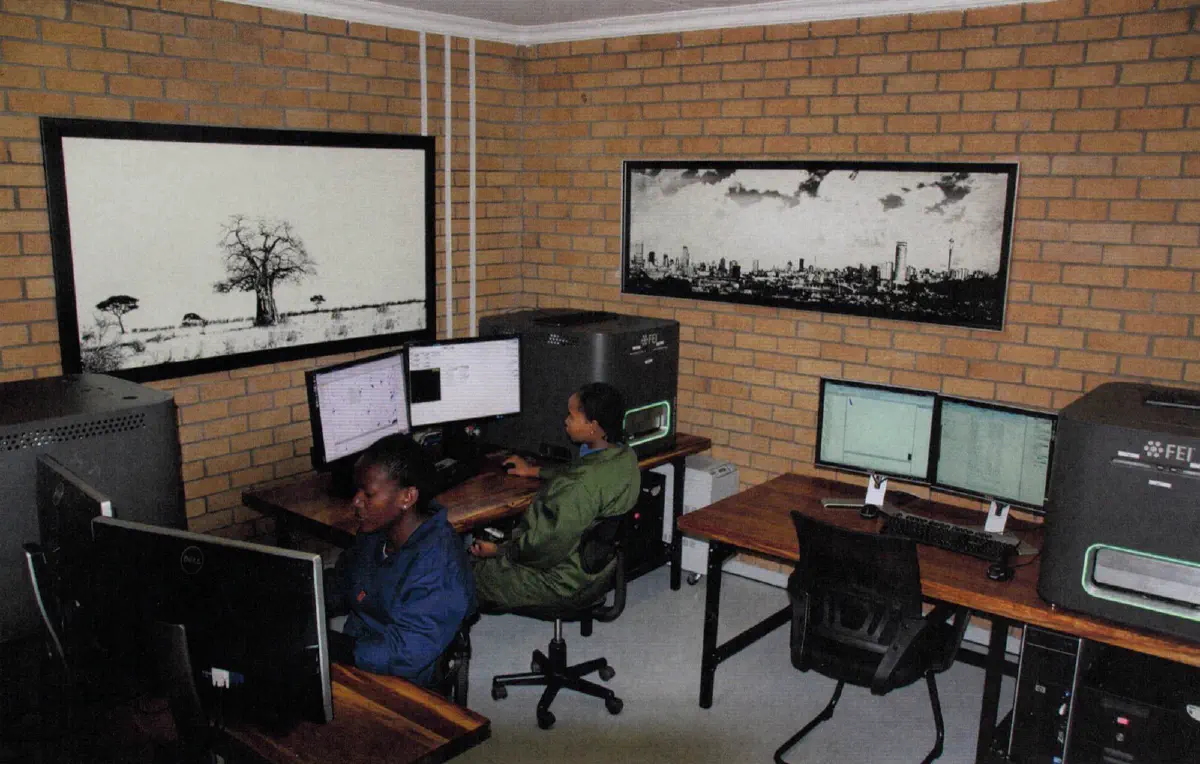
Clients send samples to the Betachem and Nasaco process mineralogy laboratory in South Africa when they have flotation problems. The laboratory scans them on one of its three A-SEM units (MLA from FEI), measures where the losses are, forms an opinion of why they occur, and suggests a remedy based on process experience and reagent know-how.
A five-point approach
The laboratory sorts losses to tails into five causes:
- Too fine to float: particles below about 10 micron, unless the process is designed for fine particle flotation.
- Too coarse to float: particles above about 150 micron in a non-coal flotation circuit.
- Locked in non-floating gangue: typically assumed at 80% locking.
- Not the correct process or reagent suite to float the value mineral.
- Other reasons, which may include process efficiency.
Case studies in the article
- Copper: 89% of the copper in a plant’s tails was chalcopyrite, and 49% of it was finer than 10 micron. The advice included flash flotation in the milling circuit, a milling and classification survey, and a rheology modifier to reduce pulp viscosity.
- Fluorspar: 79% of the fluorite lost was liberated but coarser than 300 micron. The solution was to improve milling.
- Platinum: PGMs were locked in pyroxene, which made up 70% of the feed. Regrinding the tailings is the usual solution, with changes to the frother and gangue depressant advised as a secondary step.
- Nickel: 35% of the nickel in the final tails was in pyrrhotite that the reagent suite did not recover. The operation chose a pyrrhotite depressant and adjusted its mine plan, with the option to revisit recovery when economics improve.
- Zinc: 53% of the sphalerite losses were well-sized, liberated particles. With no mineralogical reason for the loss, a more suitable collector and frother were recommended.
As Riaan Grobler, manager of the laboratory, puts it in the article: “A core value for us is working with our clients conducting periodic control testing, which allows us to monitor and handle changes.”